What changes when attackers get faster?
Imagine that a weakness in one of your systems could be found and exploited in hours instead of weeks. On 7 July 2026, the three European Supervisory Authorities (the ESAs: EBA, EIOPA and ESMA) backed a warning from the European Systemic Risk Board (ESRB). The warning says frontier AI models have become far better at finding and exploiting high-severity vulnerabilities in IT systems within very short timeframes.
A frontier AI model is one of the most capable general-purpose AI systems available at a given time. The ESAs still described the EU framework, including DORA and the AI Act, as a solid foundation. However, they warned that the speed and scale of these tools could weaken the operational resilience of financial entities.
Is the frontier AI statement a new law?
No. On 31 July 2026, the ESAs published a statement calling for a cross-sectoral, risk-based and consistent supervisory approach to ICT (information and communication technology) risks from frontier AI models. It builds on existing regulatory requirements and recent publications from the ESRB, ENISA and other authorities.
The legal anchor is still DORA, the Digital Operational Resilience Act, which is Regulation (EU) 2022/2554. It entered into force on 16 January 2023, applies from 17 January 2025, and covers more than 20 types of EU financial entities. The ESAs encourage firms and supervisors to use the statement as a basis for supervisory dialogue. A reasonable reading is that AI-driven threats belong within DORA's existing obligations, not in a separate legal regime.
How do DORA's pillars apply to AI-assisted attacks?
As ESMA lists them, DORA's main topics include ICT risk management, ICT third-party risk management, digital operational resilience testing, ICT-related incidents, and oversight of critical ICT third-party providers (CTPPs). CTPPs are technology providers the ESAs designate as critical for the financial sector. The 31 July statement places particular emphasis on preventing, detecting and managing frontier AI cyber risks, supported by robust governance and risk management frameworks.
One way to use this is to ask a question for each pillar. For risk management: does the time you assume between a flaw becoming known and being exploited still hold? For testing: do your exercises, including threat-led penetration testing (authorised tests that imitate real attackers' tactics), allow for faster adversaries? For third parties: the ESAs say they are engaging with CTPPs on how those providers are adapting.
A hypothetical example: the patch window that shrank
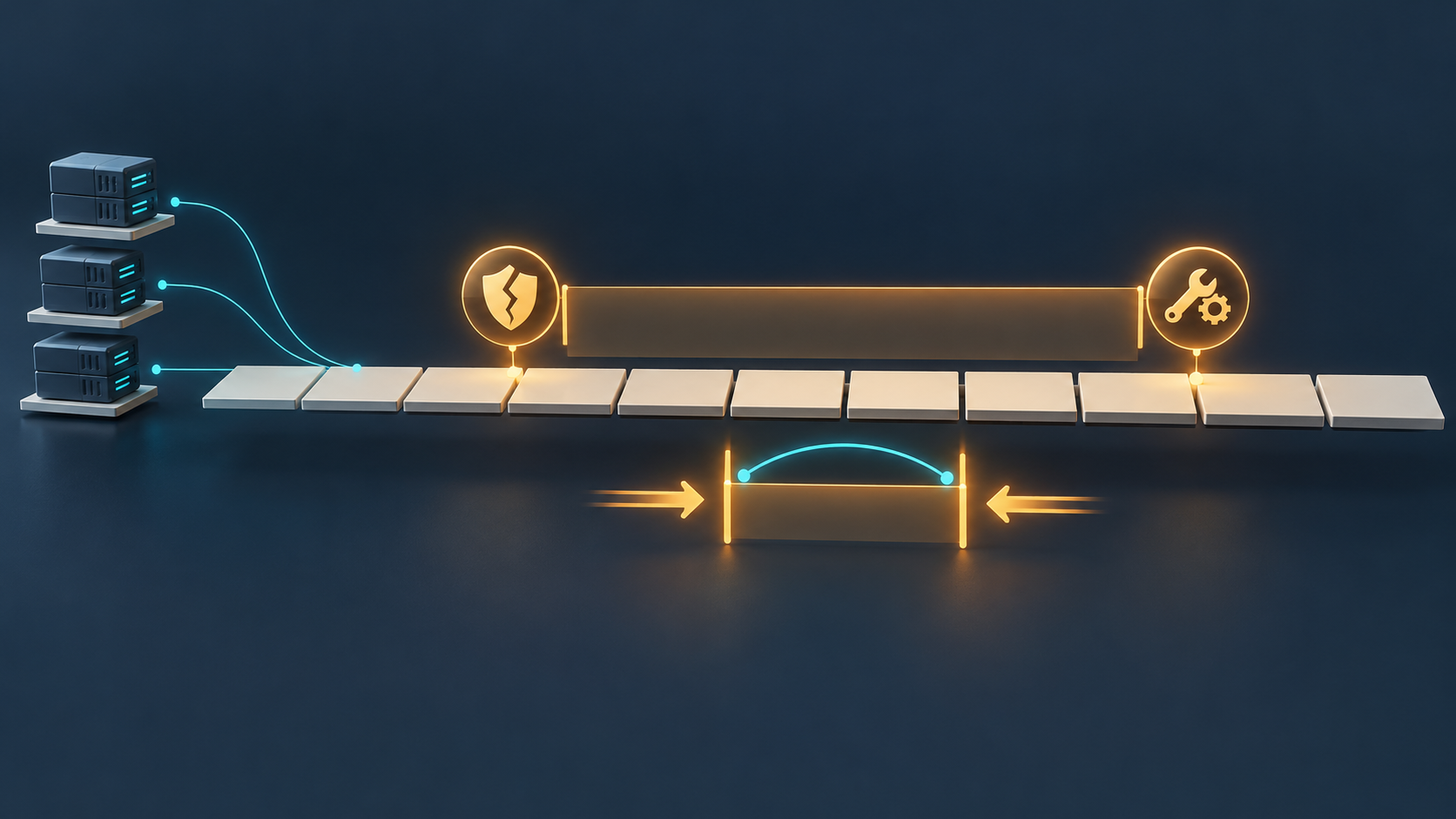
In this hypothetical example, an EU financial entity schedules a high-severity flaw in an internet-facing system for its next monthly patch cycle, assuming attackers need weeks to use it. After reading the supervisors' warning, its risk team questions that assumption. The team shortens the patch window for such flaws, checks whether monitoring would catch exploitation attempts before the fix is applied, and asks its key ICT providers how they are adapting.
What can you do next?
The ESAs have already encouraged financial entities, in their first annual report on major ICT-related incidents under DORA, to strengthen cybersecurity measures as AI-driven tools evolve quickly. A practical next step is to find one written speed assumption in your ICT risk documentation, such as a patch deadline, a detection threshold or an incident escalation trigger. Test it against the 31 July 2026 statement and record whether it still holds. That record is a concrete starting point for supervisory dialogue.
References
- EBA, EIOPA and ESMA call for enhanced governance and consistent supervision to mitigate ICT risks from frontier AI models in the EU financial sector | European Banking Authority
- The ESAs support ESRB warning on systemic cyber risks from frontier AI models | European Banking Authority
- Digital Operational Resilience Act (DORA)